

After the Storms: A Call for Water Regeneration
When Water Is Held, Life Thrives – Lessons from This Winter in Portugal
After an exceptionally wet winter in Portugal, Tamera’s Water Retention Landscape showed its value once again. Join us online or on-site to learn how rainwater management can help restore resilience in times of climate instability.
by Silke Paulick and Silvano Rizzi, 28/3/2026
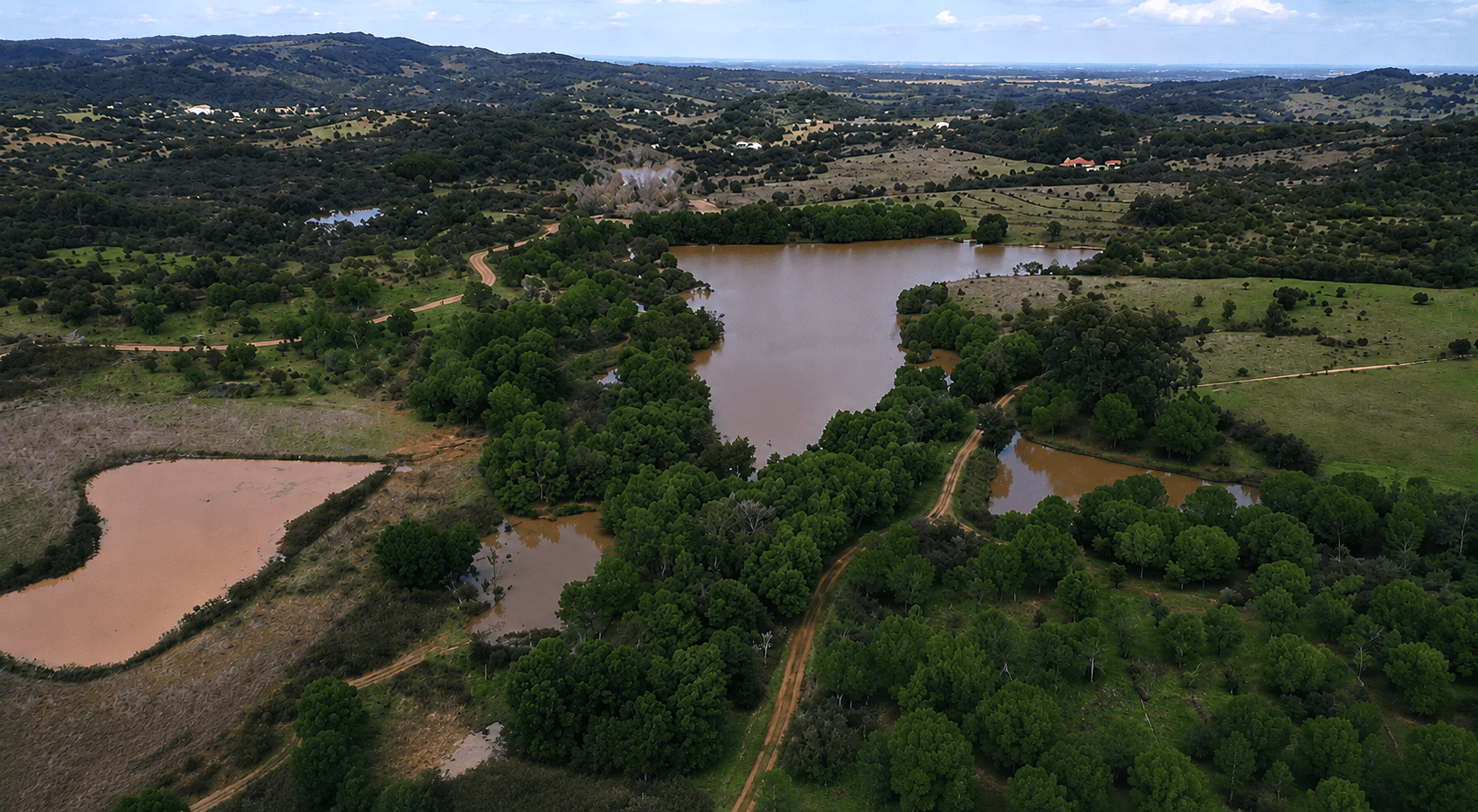
This winter has written a new chapter in our landscape story.
Across Portugal, a series of powerful Atlantic storms brought extreme rain, flooding, landslides, and severe infrastructure damage. Storms such as Kristin, Leonardo, and Marta displaced communities, cut power and transport lines, damaged homes and public buildings, and caused significant economic losses.
Also here, on Tamera’s land, the soaked clay made our roads impassable, and street material was washed away to unseen places. Trees, no longer anchored in the soft, waterlogged soils, fell or broke in the storms, blocking streets and threatening damage to our living areas. These events highlighted the growing intensity of hydrological extremes and the vulnerability of landscapes unprepared for heavy rainfall.
In the midst of it all, we were reminded once again that water retention is not a luxury, but a responsibility. In this sense, we want to express our gratitude to permaculture pioneer Sepp Holzer, who gifted us the vision of the Water Retention Landscape. In the documentary The Rebel Farmer Who Turned a Harsh Mountain into a Thriving Paradise by Zachary Weiss, Sepp’s work is beautifully portrayed, and Tamera’s landscape appears throughout many of the images.
Back in 2011, we decided to build another water retention pond – three times the size of our main lake: “Lake 1”. Over the years, this “Big South Lake” has stood high in the landscape as an important reservoir. Its catchment area is disproportionately small, and many times it appeared almost empty. We wondered if we had built it too big.
This winter brought a new reality. With almost 1000 mm (!) of rain so far – well above the ~600 mm seasonal average – this level has been reached only once in the past two decades, making it a truly exceptional year. The “Big South Lake” is still not full – but it is approaching overflow level. One extreme rain event filled much of its retention space within days. Built to buffer heavy rainfall, it protected everything below – gardens, paths, infrastructure – while holding precious water high in the landscape for future dry months, slowly releasing it back into the ecosystem and reminding us that resilience is not about resisting extremes, but learning to live with them.
Now, spring has arrived. The soils are saturated, the grasses are lush, and biodiversity thrives. There is a palpable sense of safety in the land – the kind of safety that arises when water is nurtured and retained, not drained away. Or, more aptly put: “slow it, spread it, and sink it!” Abundance is not just an abstract concept here; it is embodied in every flowering plant and every bird call at dawn.
We celebrate this season with gratitude – and with commitment. Because regeneration of the water cycle is one of the most powerful climate actions available to us.agriculture, regeneration, and aquifer restoration. What once looked oversized now looks foresighted.
We wish to make sure that this knowledge is accessible for all who can benefit from it, whether you are beginning your journey or ready to go deeper into practice. With this intention, we are offering two connected learning paths – one online and one on-site – each designed to meet you where you are while building collective capacity for regeneration. We hope you join us for the water revolution, in service of our beloved planet.
ONSITE COURSE:
Water Retention Landscape of Tamera, June 27 – July 4
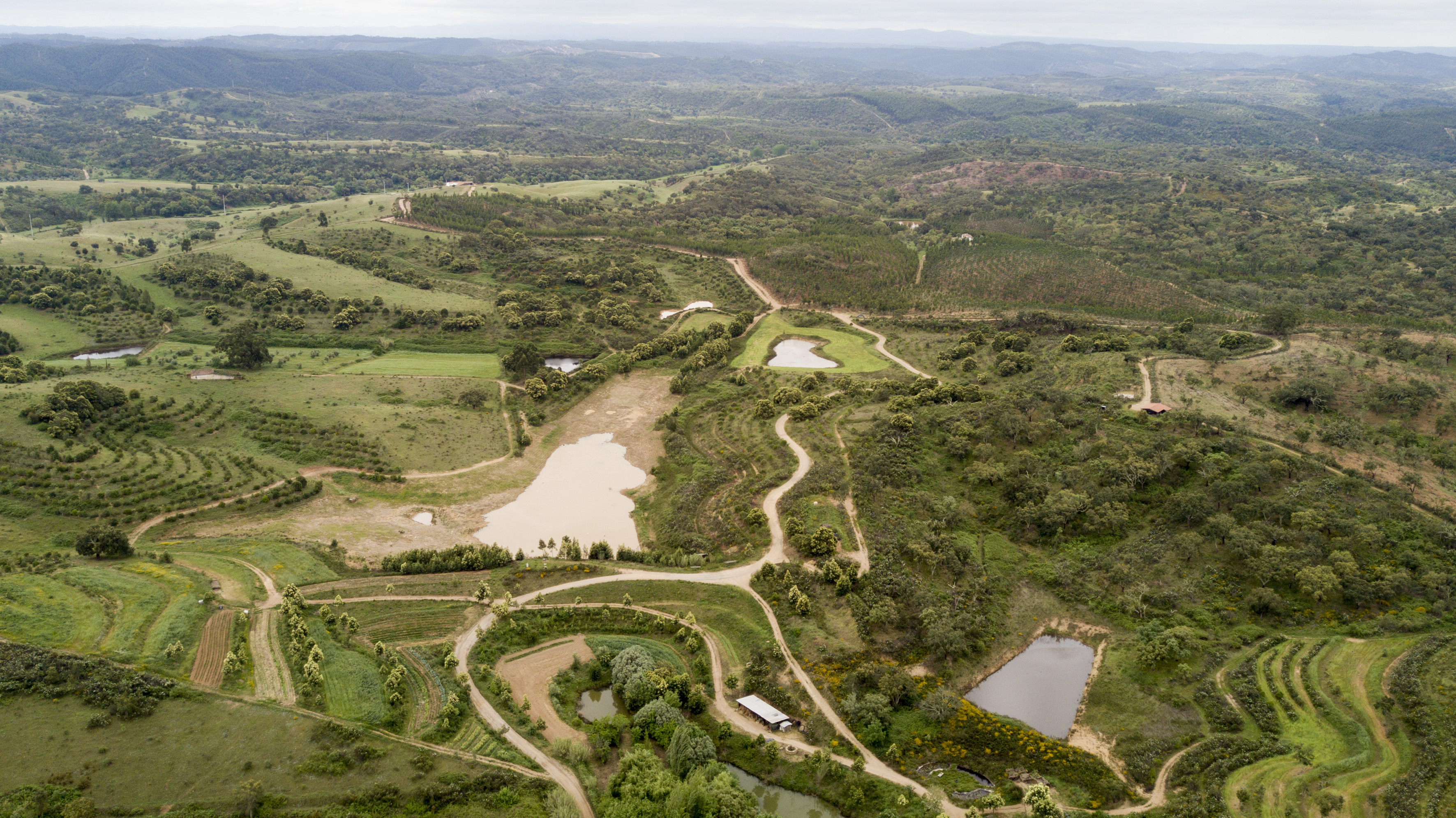
For those who want to experience the principles directly in the field, our on-site training offers immersive, hands-on learning within Tamera’s Water Retention Landscape.
Together we read the terrain, explore watershed thinking, practice contour work, and implement concrete restoration measures. Alongside technical knowledge, we reflect on the deeper relationship between inner and outer landscapes and the responsibility of land stewardship in times of climate instability.
This seminar combines practical skill-building, community life, and direct contribution to ongoing ecological restoration work. More details here.
ONLINE COURSE:
“Rainwater Management: Change Climate Change”

Our online program offers a clear and practical introduction to restoring the water cycle. You will learn how droughts and floods emerge from disrupted systems, and how thoughtful rainwater retention can rebuild resilience in landscapes and communities.
Through concise theory modules, real-life examples from southern Portugal, interviews with practitioners at Tamera, and interactive assignments, you will gain practical tools for planning and implementing decentralized water solutions across diverse contexts.
The course is affordable through a sliding scale, so that financial means are not a barrier to learning. More details here.